
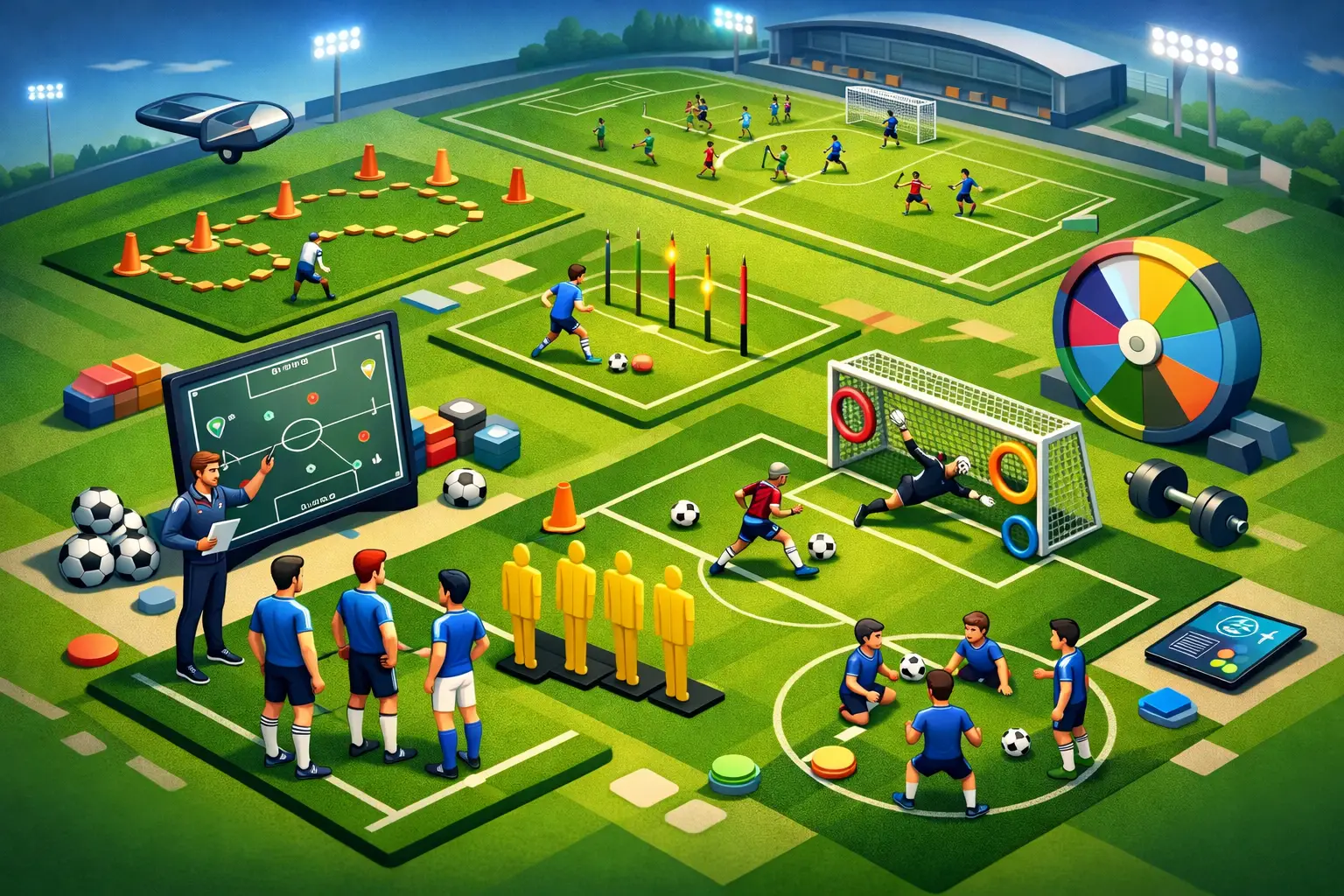
A five-star player can still feel average if his training targets the wrong attributes. That is why the best training drills in Top Eleven explained is not just a list of high-value exercises. It is a practical way to connect every session to a player’s position, role, condition, and place in your next match.
Top Eleven training rewards managers who plan rather than simply fill drill slots. The strongest routine develops the attributes that influence a player’s job on the pitch while maintaining team training bonuses. A striker does not need the same emphasis as a center back, and a young prospect should not always follow the exact program used for an established starter.
What makes a Top Eleven training drill worth using?
A good drill does one of two things: it builds an attribute group your player needs, or it contributes to a team bonus you want ready for matchday. The best sessions usually do both.
Start with the role, not the player’s overall percentage. Overall quality is useful, but it can hide the reason a player performs well or poorly. A winger who cannot cross or a defensive midfielder with weak positioning can become a liability even when his displayed quality looks competitive.
Condition is the other limit. Training hard with a player who will start a crucial match can cost more than it returns. Monitor the condition loss shown before confirming a session and leave enough recovery room for fixtures, especially during a busy cup or Champions League week. A lower-intensity session is often the correct decision when the alternative is starting your best player below full fitness.
Finally, use drills at an appropriate difficulty for the player. A drill that is too easy may offer limited development. One that is too demanding can produce a poor result and waste condition. There is no universal difficulty setting that fits every squad, so adjust as players improve.
Best training drills in Top Eleven, explained by purpose
The drill names and availability can change as Top Eleven updates, but the principles below apply to the core drills managers use most often.
Warm-Up and Stretch: reliable team-bonus builders
Warm-Up and Stretch are not exciting, but they are useful foundations. They are typically low-risk choices when you need to maintain training activity without draining key starters. Use them to help build team bonuses, to introduce a young player to a session, or to complete a mixed group where several players have different development needs.
They should not dominate an individual-growth routine. If you are trying to turn a raw striker into a consistent finisher, general warm-up work alone will be too slow. Think of these drills as efficient support tools, not the centerpiece of a development plan.
Skill Drill and Piggy in the Middle: technical control and possession
Skill Drill is a strong general technical option for players whose jobs depend on ball control, passing, and decision-making under pressure. Central midfielders, attacking midfielders, fullbacks, and wide players can all benefit when their technical attributes lag behind their physical profile.
Piggy in the Middle is especially useful in possession-focused sessions. It fits midfield units well because it supports the habits behind circulation: receiving, moving, and finding the next pass. If your team struggles to keep the ball against stronger opponents, do not only change tactics. Check whether the players responsible for progression have been trained with enough technical focus.
For a deep-lying midfielder, pair a technical drill with a defensive one rather than stacking only possession exercises. The role still needs to win the ball and protect the space in front of the defense.
Gym and Sprint: physical tools with clear trade-offs
Gym and Sprint are core physical drills. Gym is useful for strength-oriented players such as center backs, defensive midfielders, target forwards, and fullbacks who regularly face physical duels. Sprint helps players who depend on acceleration, recovery pace, or runs beyond the line.
The trade-off is simple: physical development can be valuable, but it is easy to overtrain because these drills can cost meaningful condition. Use them with a purpose. A slow center back may need Sprint work to avoid being exposed by direct opponents. A winger already blessed with pace may gain more from crossing, passing, or finishing training instead.
Physical sessions are often most effective for younger players and prospects you are actively building. For veteran starters, protect match readiness first. Their next performance can matter more than a marginal training gain.
Pass, Go & Shoot and Shooting Technique: attack with an end product
Pass, Go & Shoot is one of the most versatile attacking drills because it connects combination play with a final action. It works well for attacking midfielders, wingers, shadow strikers, and forwards who participate in build-up rather than waiting only for crosses.
Shooting Technique has a narrower job. Use it when a striker, inside forward, or attacking midfielder needs better finishing output. If a player gets into good positions but rarely converts, this is a more direct answer than repeatedly adding pace or strength.
Avoid treating every attacking player as a striker. A classic winger may need passing and crossing support more than pure shooting. An attacking midfielder who feeds runners may need technical balance before specialized finishing work. Train for how you actually use the player in your formation.
Slalom Dribble and Fast Counter Attacks: movement for wide and transition players
Slalom Dribble is a natural fit for wingers, attacking midfielders, and mobile forwards. It supports players who need to carry the ball into dangerous areas or beat a defender before releasing the final pass. It is less urgent for a stay-at-home center back, even if the drill delivers an attractive result on the screen.
Fast Counter Attacks is valuable when your tactical identity depends on breaking quickly. Use it for players who must sprint into space, make forward runs, and contribute immediately after a turnover. Wide forwards and quick strikers often fit this profile well.
Do not build a counterattacking unit only with pace. Transition football also needs passing quality and players capable of finishing quickly. A balanced session for a fast striker may combine a pace-focused drill with Pass, Go & Shoot or Shooting Technique across the week.
Hold the Line, Stop the Attacker, and Defending Crosses: defend the situations you face
Defensive drills are most useful when they reflect the threats opponents create. Hold the Line suits center backs and defensive midfielders who need positional discipline. Stop the Attacker is a practical choice for defenders who must win direct duels. Defending Crosses matters most for center backs and fullbacks facing teams that attack wide areas.
A common mistake is training defenders only for physical strength. Strong defenders still need positioning, tackling, and awareness. If your team concedes from wide delivery, use a drill that addresses the problem instead of adding another general Gym session.
Fullbacks deserve special attention because their roles vary. An attacking fullback may need technical and pace work alongside defensive training. A conservative fullback in a narrow defensive system can place more emphasis on positioning and duels.
Use Your Head and set-piece drills: targeted value, not daily staples
Use Your Head can help aerially important center backs and forwards. It makes sense for a target striker, a defender who attacks corners, or a player frequently involved in crossed deliveries. It is not automatically the best choice for every tall player, however. Consider whether aerial play is genuinely part of your tactical plan.
Set-piece-focused drills can create an edge when matches are tight, particularly if you have a reliable taker or strong aerial targets. Their value depends on your squad. If your free-kick specialist already performs well and you rarely create set-piece chances, broader training may offer more immediate value.
Build training groups around roles, not your whole squad
Training every player together is convenient, but it often produces generic development. Split players into small, logical groups when possible: defenders, central midfielders, wide attackers, and strikers. Then tailor a session around the job those players perform.
A balanced center-back group might use Hold the Line, Stop the Attacker, Gym, and Defending Crosses. A possession midfielder group could use Skill Drill, Piggy in the Middle, Pass, Go & Shoot, and one defensive drill for balance. For wide attackers, combine Slalom Dribble, Sprint, Pass, Go & Shoot, and Shooting Technique when they cut inside.
These are starting points, not fixed formulas. A defensive midfielder used as a deep playmaker needs a different blend from a ball-winning midfielder. A striker in a two-forward system may need link-up development, while a lone striker may benefit more from finishing and physical work.
A smarter weekly routine for competitive managers
On lighter fixture weeks, use focused individual development. Pick one or two players with clear weaknesses or high growth potential, and give them drills that directly address their role. Keep the rest of the squad active enough to support training bonuses without exhausting your best eleven.
When the calendar is crowded, switch priorities. Train reserves, rotation players, and prospects more aggressively while protecting starters for decisive matches. This is where many managers lose value: they chase daily gains, then enter a knockout fixture with low-condition players and a weaker lineup.
Review results after matches. If a winger creates chances but rarely scores, that is different from a winger who cannot beat his marker. If your center backs lose aerial duels, investigate the specific weakness before selecting drills. Training should respond to evidence, not habit.
Squad XI Pro can make that review faster by helping managers organize player data and compare development priorities after an OCR squad scan. The decision remains yours, but seeing attribute gaps clearly makes it easier to assign the next useful session.
The best drill is the one that improves a player’s next meaningful action. Train with a role in mind, protect condition when fixtures demand it, and let each session move your squad toward the football you want to play.